 Saskia
 Many people treat Dar es Salaam as a place to endure rather than enjoy. But after visiting Dar several times while living in Tanzania, I’ve found that the city has a lot to offer if you stop looking for sights and start looking for experiences.
Because the city is so spread out and the traffic is so unpredictable, I’ve organized these top things to do in Dar es Salaam by type so you can plan your days without spending six hours in a car.
For a complete overview about Dar beyond activities, check my full Dar es Salaam Travel Guide.
Explore the Coast and Islands
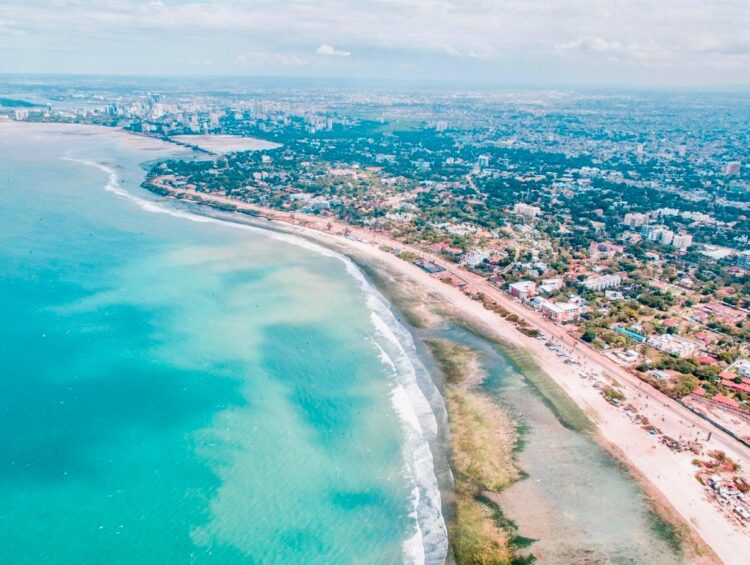
Since Dar is a coastal city, the ocean and beaches are its best features. When the humidity hits 90%, getting on a boat is the only way to find a breeze. The city offers a mix of lively city beaches, calm bays, and easy-access islands.
Island Escapes
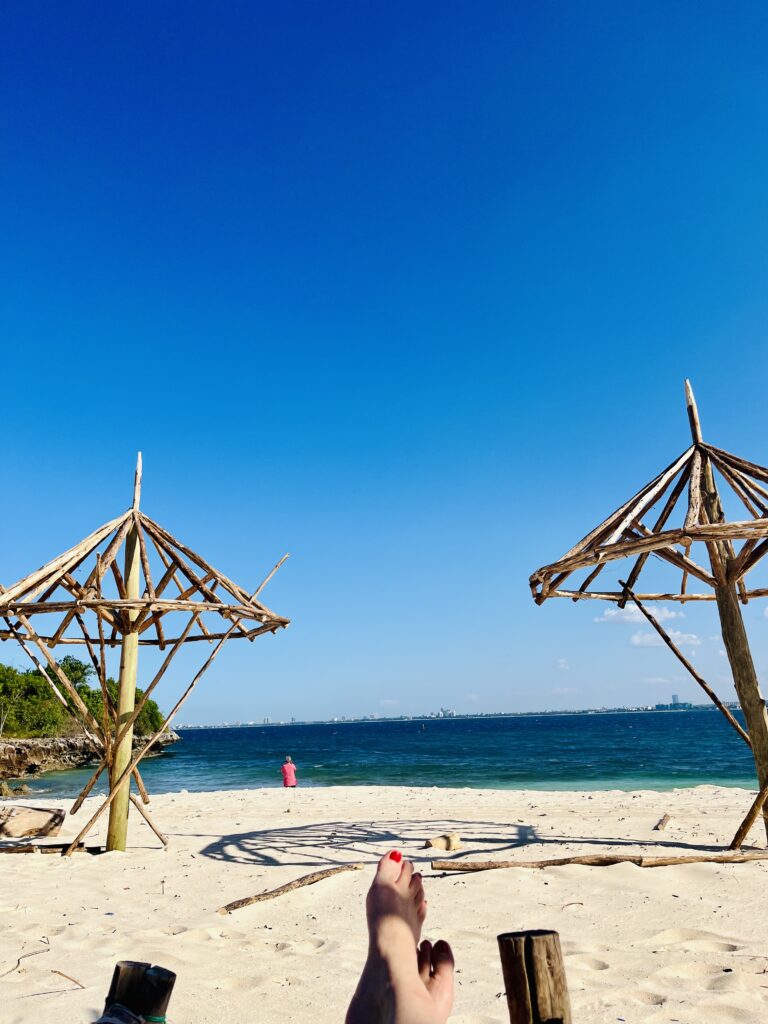
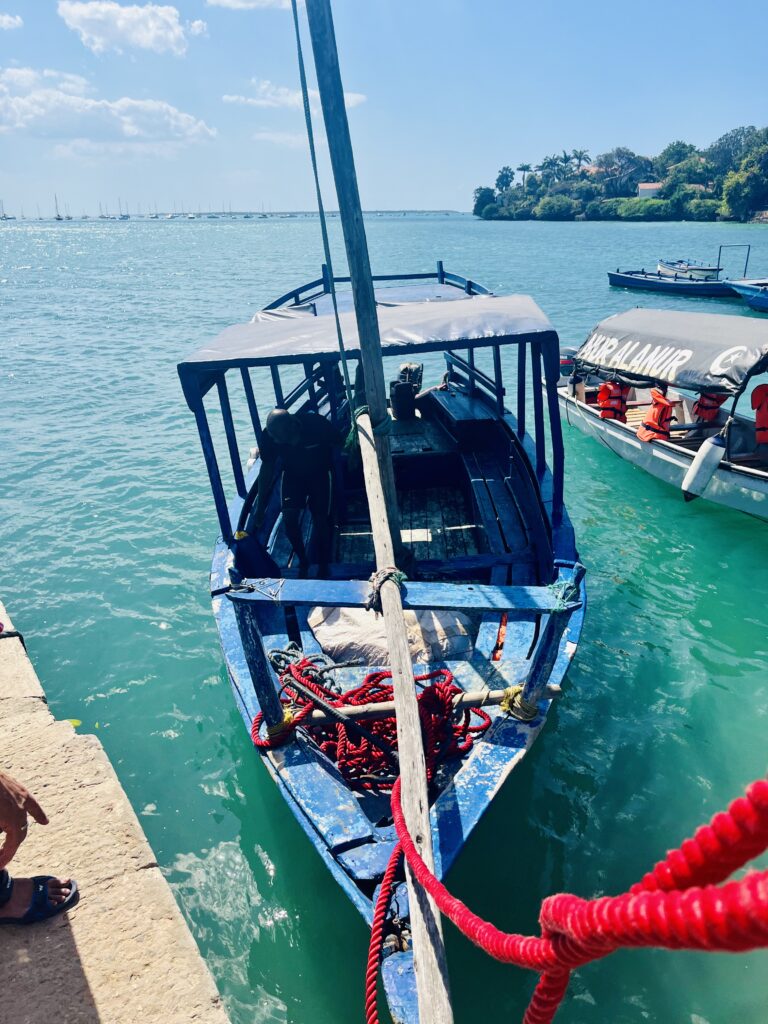
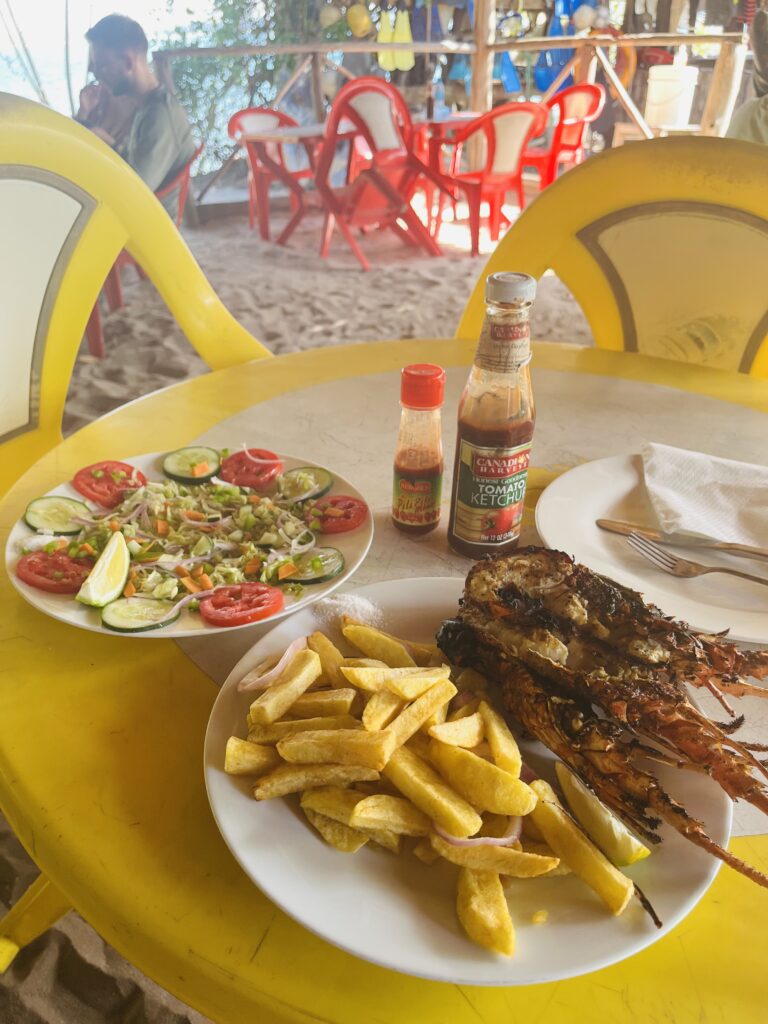
- Mbudya Island: This is my top recommendation. You take a small wooden boat from the Msasani Slipway or the docks in Kunduchi. It’s a marine reserve with no permanent residents, just white sand and turquoise water. You can order fresh lobster or fish from the local vendors on the island – just be prepared to wait a while for it to be grilled.
- The Cost: Expect to pay around $15–$25 for the boat and a $12 Marine Park fee.
- Tip: Order your food the moment you arrive. The “island time” for grilling fish is real, and it can take over an hour.
- Bongoyo Island: Closer to the peninsula and very popular for day trips. It’s great for a quick swim, but it can get quite crowded on the weekends with both locals and tourists. It has a bit more shade than Mbudya but the water is rockier.
- Sunset Dhow Cruises: Several operators on the peninsula offer sunset cruises on traditional wooden dhows. It’s a bit touristy, but watching the city skyline turn orange from the water is a great way to end a day.
The Peninsula Beaches (Oyster Bay)
- Coco Beach (Oyster Bay Beach): This is the most famous public beach in the city.
- The Vibe: Don’t come here for a quiet swim in a bikini, it’s a social hub. On weekends, it’s packed with local families, street food vendors, and loud music. It’s the best place to eat muhogo (fried cassava) and experience the city’s energy.
- Practicality: It’s free, and right on Toure Drive. It’s great for a sunset walk, but keep an eye on your phone and bag in the crowds.
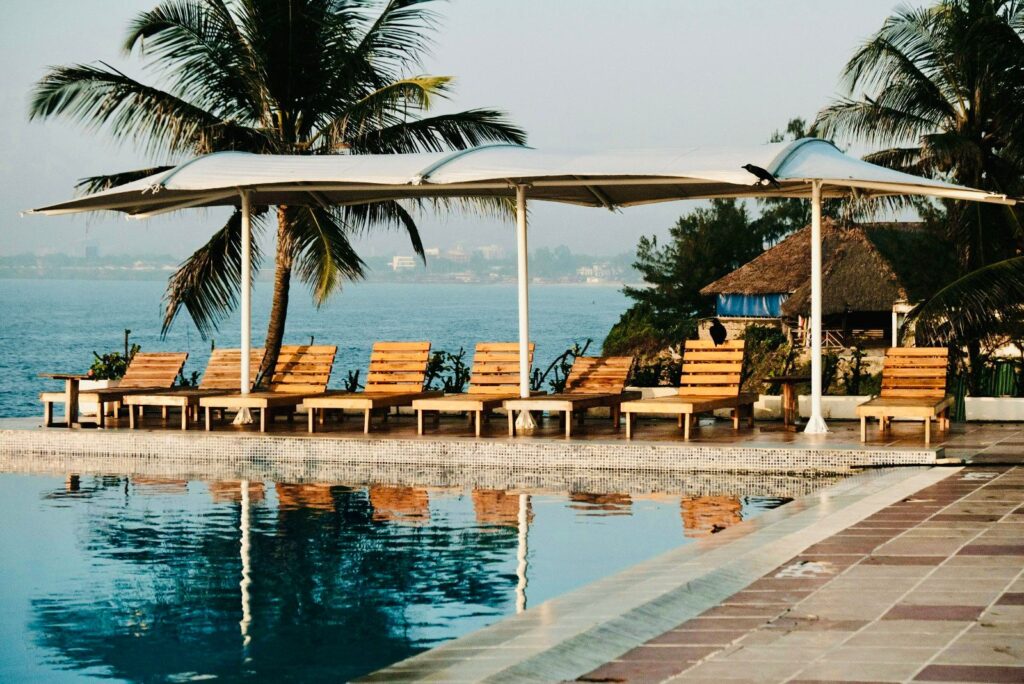
- Tip: Get a sun bed at a beach bar with a private stretch of beach, like Wavuvi Kempu.
- Oyster Bay “Hidden” Spots: Just north of Coco Beach, there are quieter rocky outcrops and small sandy patches near the big hotels (like the Sea Cliff). These are better for a quiet coffee with a view than a full beach day.
Beaches Just Outside the City
If you have a full day and want to get away from the urban grit, head north or south of the main harbor by car/Bolt. Just try to avoid going during rush hour, as you risk spending a lot of time in traffic.
- South Beach (Kigamboni): You reach this by taking the ferry from Kigamboni Ferry Terminal across the mouth of the harbor.
- The Experience: It feels much more like a holiday spot. Places like Kipepeo or Mikadi offer clean, wide stretches of sand and better swimming than the city side.
- Tip: The ferry can be a chaotic bottleneck. If you’re driving, you may want to use the Nyerere Bridge instead.
- Kunduchi & Bahari Beach (North): About 45–60 minutes north of the center.
- The Experience: This is where you’ll find the larger resorts and waterparks (like Kunduchi Wet ‘N’ Wild). The beaches here are private-access via the hotels, which means they are cleaner and have more facilities (loungers, toilets, bars). It’s the easiest “low-friction” beach day if you don’t want to deal with boats or ferries.
- Ras Kutani: If you really want to disappear, Ras Kutani is about 25km south of the city.
- The Experience: Ras Kutani is a world away from Dar’s noise. It’s mostly home to high-end eco-lodges and untouched coastline. It’s a long drive (or a very short charter flight), so it’s better for an overnight stay than a rushed day trip.
- Mbezi Beach (The Coastal Suburb): Located north of the peninsula, Mbezi is a mix of high-end residential villas and hidden beach clubs.
- The Experience: It’s much quieter than Coco Beach but has more life than the remote resorts further north. It’s where you go for a long Sunday lunch at a cafe or hotel by the water. Note: the coastline here can be quite rocky depending on the tide, so it’s not the best place for a swim (people use hotel pools for that).
- Tip: The New Bagamoyo Road, which you have to take to get to Mbezi, is a notorious traffic bottleneck. If you are staying in Masaki and just want a quick beach hit, it’s more convenient staying on the peninsula or taking a ferry to Bongoyo. Only head to Mbezi if you’re visiting a specific restaurant or staying at one of the larger resorts like the Ramada or White Sands.
Which Dar Beach is Right for You?
Dar’s coastline is varied, and choosing the wrong spot can mean spending three hours in traffic only to realize the beach is too rocky for a swim. Use this guide to pick your spot:
| If you want… | Head to… | The Reality Check |
| Pristine water & snorkeling | Mbudya or Bongoyo | You’ll need to take a boat. It’s a full-day commitment, and you’ll be on “island time” for food. |
| A “Resort Day” with pools | Mbezi Beach | The beaches here can be rocky/seaweed-heavy. You’re mostly going for the high-end hotel facilities and pool. |
| Local energy & street food | Coco Beach | Don’t bring a bikini or expect a quiet swim. Go for the street food, the music, and the people-watching. |
| Long sandy walks & swimming | Kigamboni (South Beach) | You have to cross the ferry or the bridge. It feels like a true “escape” from the city’s humidity. |
| A quick sunset drink | The Slipway (Masaki) | There isn’t really a “beach” here to lie on, but it has the best wooden decks for a sundowner. |
Markets, Local Life, and Art
If you want to see the “real” Dar, you have to go where the people are. These spots are crowded, loud, intense, and sometimes a bit overwhelming, but they are the heart of the city’s local life.
Kariakoo Market
Kariakoo is the giant beating heart of East African trade. You can find anything here: fabrics, spices, electronics, and even spare tractor parts.
- Reality Check: I’ll be honest: Kariakoo can be stressful. It is incredibly crowded, and pickpockets are very active here. I only recommend going if you are comfortable with “organized chaos” or if you go with a local guide.
- Practicality: If you go, leave your passport, jewelry, and large amounts of cash in your hotel safe. Keep your phone in your front pocket or a secure cross-body bag.
- The Reward: If you brave the crowds, the spice section is incredible, and the prices for kitenge (local fabric) are much better than what you’ll find on the peninsula.
Kivukoni Fish Market
- The Experience: Head here between 6:30 AM and 8:00 AM to see the dhows come in and the auctions start. It is a high-speed spectacle where tuna, snapper, and octopus are sold in seconds.
- Practicality: It’s free to walk through. If you’re feeling brave, you can buy a fish and pay one of the nearby vendors a few thousand shillings to grill it for you right there.
- Photography: This is a working environment, not a tourist set. Always ask before taking a close-up of a person or their catch. A small tip (2,000–5,000 TZS) is often appreciated if you’re taking up their time.
Mwenge Woodcarvers Market
If Kariakoo feels like too much, Mwenge is a much more relaxed alternative. It’s a hub for woodcarvers, specifically the Makonde people who are famous for their intricate ebony carvings.
- The Experience: You can actually see the artisans at work with their chisels. It’s the best place in Dar for souvenirs like masks, statues, and handmade jewelry.
- Haggling: This is mandatory. The first price will be high. Smile, be polite, and aim for about 60–70% of the initial ask.
- Logistics: It’s near the Village Museum, so I suggest combining these two into one trip to save on Bolt fees, and your energy.
Tinga Tinga Art Cooperative
Tucked away in Oyster Bay, this is where the famous “Tinga Tinga” painting style originated. It’s a small, colorful square where artists paint vibrant, stylized African animals and village scenes.
- Why go: It’s much quieter than the other markets. You can buy directly from the artists, and since the paintings are on canvas, they are very easy to roll up and fit in your suitcase.
| Market | Best for… | Stress Level | Tip |
| Kivukoni | Culture & Seafood | High (Sensory) | Go early; stay out of the way of workers. |
| Kariakoo | Spices & Fabric | Very High | Take a guide and zero valuables. |
| Mwenge | Woodcarvings | Moderate | Combine with the Village Museum. |
| Tinga Tinga | Local Art | Low | Great for easy-to-pack souvenirs. |
Culture and History
Dar es Salaam isn’t a city that feels like a museum, like European capitals. Its history is tucked between modern skyscrapers and busy ports, but if you know where to look, you can see the layers of Swahili, German, and British influence that shaped Tanzania.
Village Museum (Kijiji cha Makumbusho)
If you only visit one cultural site, make it this one. Unlike a traditional “indoor” museum, this is an open-air collection of authentic, life-sized traditional huts from various ethnic groups across Tanzania.
- The Experience: You can walk through the different homes to see how architecture changes based on the climate of each region. Much more engaging than looking at photos in a gallery.
- The Highlight: If you can, visit on a Saturday or Sunday afternoon (around 4:00 PM). They usually have traditional dance and drum performances that are high-energy and very impressive.
- Practicality: It’s located on Bagamoyo Road. There is an entrance fee of around $10, and you can hire a guide at the gate for a few extra dollars to explain the tribal histories.
Dar es Salaam National Museum & House of Culture
Located in the City Centre near the botanical gardens, this is the place to go if you want a deeper dive into Tanzania’s roots.
- What to see: Skull bones of the famous Paranthropus boisei (one of the oldest human ancestors) and miscellaneous material related to Tanzania’s German and British rule, ethnographic collections on Tanzanian cultures, and ancient Chinese pottery.
- Reality Check: The museum is a bit old-school, but it’s a quiet, shaded escape from the city heat. It’s also walking distance from the Zanzibar Ferry, making it a good spot to kill time before your boat leaves.
Azania Front Lutheran Church
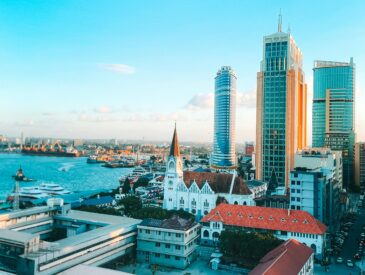
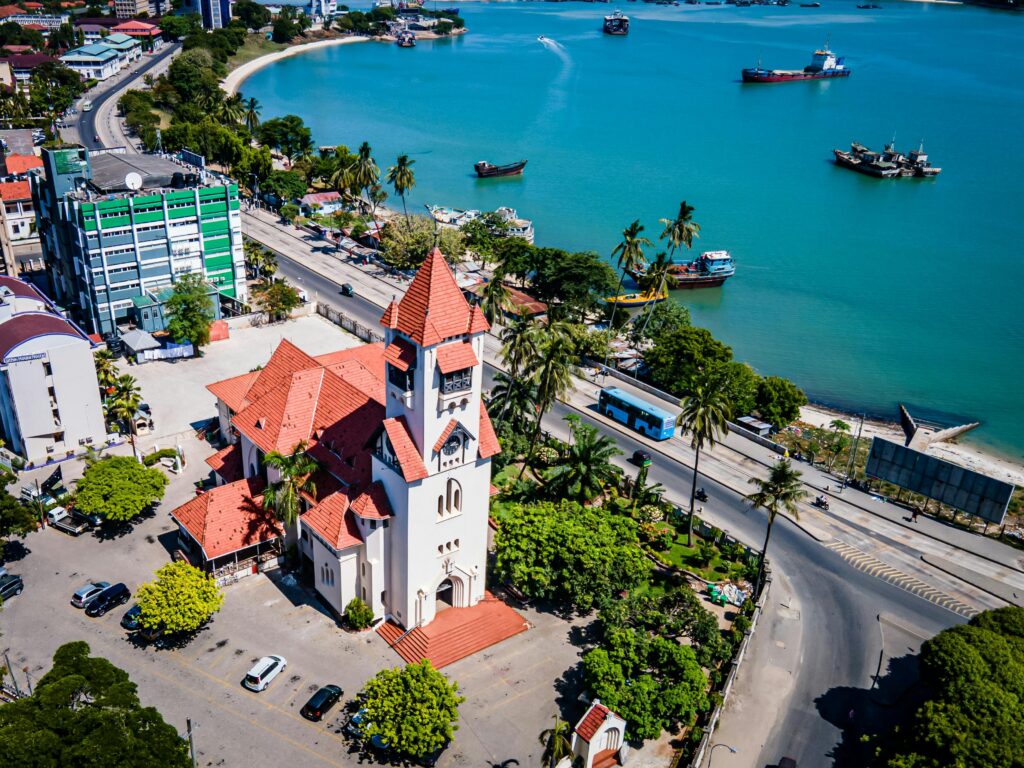
You’ll see this iconic red-roofed building on almost every postcard of Dar. Built by German missionaries in the late 1800s, it sits right on the harbor front.
- Why visit: It’s a beautiful piece of architecture that feels completely out of place against the tropical palms and the massive modern port.
- Practicality: You can usually walk inside to see the interior, but this is an active church, so be respectful of ongoing services. It’s a great landmark to use for a walking tour of the “Old Dar” City Centre.
Askari Monument
Located at the center of a major roundabout in the city, this bronze statue commemorates the African soldiers (Askari) who fought in World War I.
- Tip: Don’t try to walk to the middle of the roundabout; the traffic is relentless. It’s better to view it from the sidewalk or as you pass by in a Bolt. It marks the historical center of the city and is a good starting point for exploring the colonial-era streets of the City Centre.
History & Culture Matchmaker
| If you want… | Head to… | Time Needed |
| Active & Visual | Village Museum | 2 Hours |
| Quiet & Educational | National Museum | 1.5 Hours |
| A Quick Photo Op | Azania Front / Askari | 15 Minutes |
Considering the fact that Dar es Salaam is not the easiest to navigate, I highly recommend doing a city tour where a local takes you along to see various sights. This female-driven tuk tuk tour combines a variety of attractions. For those suffering from the heat, this tour in an air-conditioned vehicle may be a more attractive option. For those looking to get some steps in, there is also a city center walking tour.
Leisure and Modern Dar
For the days when you aren’t in the mood to haggle at a market or trek through a humid museum, Dar has a “softer” side. These are the places I go when I want to feel a breeze, find a reliable coffee, or just escape the concrete for a few hours.
The Slipway (Msasani Peninsula)
If you are staying in the “expat bubble” of Masaki, you will inevitably end up at The Slipway. It’s a waterfront complex that feels a bit like a Mediterranean village dropped into the middle of Tanzania.
- The Experience: It’s a safe, easy place to walk around, browse bookstores, buy quality crafts, or just sit at a café and watch the dhows go by. There’s a variety of shops, including high-quality craft shops that don’t require the intense haggling of the street markets.
- Tip: The best time to be at Slipway is during the sunset. There is a wooden deck over the water, and several nice restaurants and bars, where everyone gathers for a “sundowner.” It is easily the most relaxed spot in the city.
Rooftop Bar Hopping
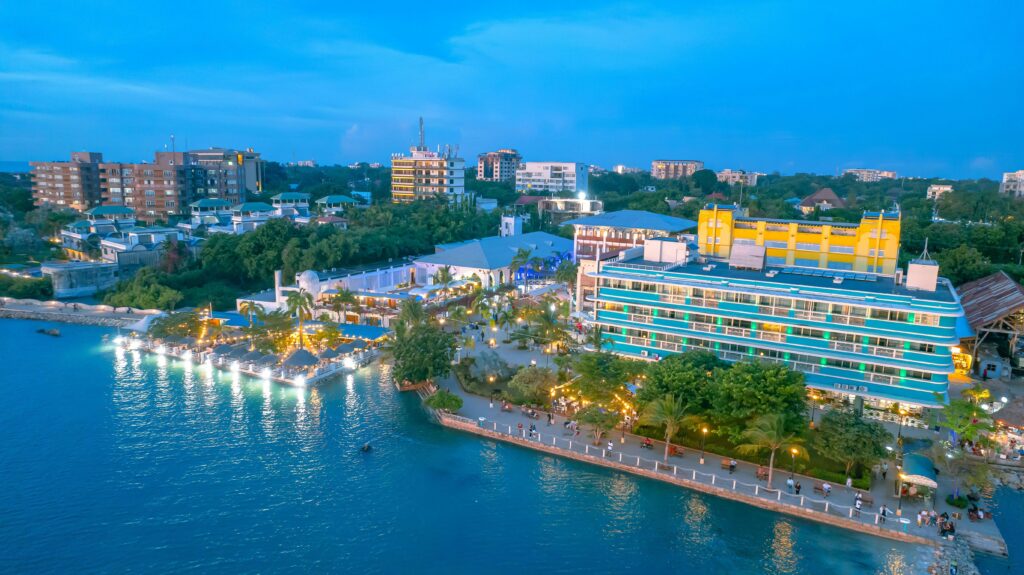
In Dar’s heat, rooftop bars are a great way to get a consistent breeze and really see the scale of the city.
- The Experience: Most of the best rooftops are in the City Centre (like Level 8 at the Hyatt or the Akemi revolving restaurant) or in Masaki (various lounges).
- Vibe: This is where the modern, social side of Dar happens. It’s casual but polished. You don’t need a suit, but you will want to swap your safari zip-off pants for something a bit nicer.
Day Trips and Excursions from Dar es Salaam
If you have an extra day or two, Dar is the perfect jumping-off point for several types of excursions. You don’t have to fly to the Serengeti to see a lion, and you don’t have to move hotels to see the ruins of an ancient city.
The Quick Safari: Mikumi National Park
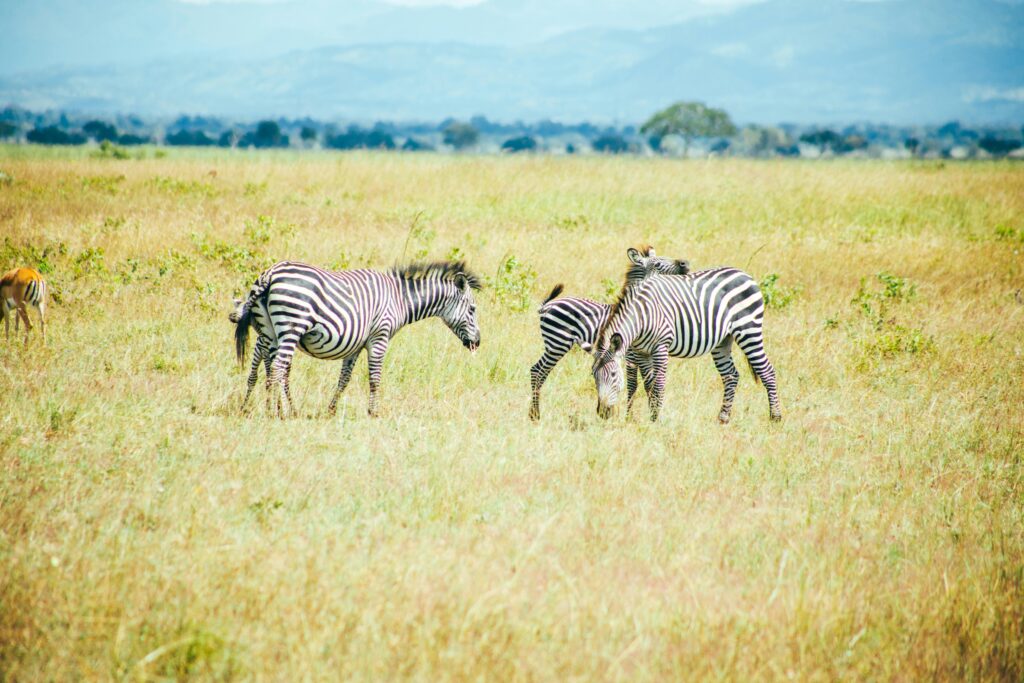
Mikumi is the most popular day-trip safari from Dar, and for good reason. It’s often called “Little Serengeti” because the open horizons and abundance of wildlife (elephants, giraffes, zebras, and lions) make for incredible sightings in a short time.
- How to do it: You have two real options. You can drive (5–6 hours each way, not for the faint of heart) or take the SGR train to Morogoro, which is a much more modern and comfortable way to travel.
- Reality Check: A one-day trip to Mikumi is possible, but it’s an exhausting 15-hour day. If your planning allows, I always recommend a two or three day trip. That way you can also do an early morning game drive, which is a beautiful experience and when the animals are most active.
Saadani National Park
Saadani is one of the only places in the world where you can see elephants wandering on the beach. It is much less visited than Mikumi, which makes it feel like your own private wilderness.
- The Experience: You can do a boat safari on the Wami River to see hippos and crocodiles, followed by a game drive on the plains. It’s raw, quiet, and feels very “old Africa.”
- Logistics: It’s about a 3.5 to 4-hour drive north of Dar. Like Mikumi, it’s a long day, but the combination of river, ocean, and savannah is unique.
Bagamoyo: The Soul of the Coast
If you’re a history buff, Bagamoyo is non-negotiable. It was once the gateway for explorers like Livingstone and Stanley and a major hub for the ivory and slave trades.
- What to see: The Kaole Ruins (13th-century coral mosques), the Old Boma, and the Catholic Mission Museum.
- Tip: The town has a very “sleepy” vibe compared to Dar. It’s only about 1.5 to 2 hours north, making it the easiest day trip for those who want culture without the 4:00 AM safari wake-up call.
Pugu Hills Nature Forest Reserve
If the city starts to feel too grey and loud, Pugu Hills is the “green lung” of Dar. It’s about 20km southwest of the city center and contains what is believed to be some of the oldest forest in the world.
- What to do: You can go for a guided hike to Msolo Peak for a panoramic view of the city skyline in the distance. There’s also Minaki Dam where you can go kayaking, bat caves, and ritual sites.
- Practicality: It takes about 1 to 1.5 hours to drive there from Masaki due to the traffic near the airport. Entry fees are around $10 for foreigners.
- Reality Check: I only recommend this in the dry season (June–October). If it has rained recently, the trails become incredibly slippery, even with proper hiking boots. If you go, wear long sleeves and bring bug spray; the forest mosquitoes are no joke.
Ready to Explore Dar es Salaam?
Dar es Salaam is a city that rewards the patient and the curious. It’s not a place where you “check boxes” of sights; it’s a place where you experience the heat, the hustle, and the incredible coastal views.
My biggest piece of advice? Don’t rush it. Pick one neighborhood or one major activity per day, factor in plenty of time for traffic, and always keep a cold drink nearby.
What’s Next for Your Tanzania Trip?
Now that you have your itinerary sorted, make sure you’re prepared for the logistics:
- Wondering what to pack? Get my recommendations in my complete Tanzania Packing List.
- If you’re heading to Zanzibar next, check out my updated Zanzibar 2026 Guide for the latest ferry and hotel info.
- Want more information about Dar generally? Read Dar es Salaam Guide: What to Expect in Tanzania’s Largest City.
- Wondering what to do in Arusha? Have a look at my Traveler’s Guide to Tanzania’s Safari Capital.
This page contains links through which I may earn a commission, at no additional cost to you.