 Saskia
 Choosing where to sleep on safari, and figuring out what you can expect from a specific type of accomodation in Tanzania, can be more overwhelming than picking the parks themselves. The terms “lodge” and “tented camp” are used frequently, but they mean very different things for your comfort, your wallet, and your proximity to wildlife.
In this guide, I break down the main types of Tanzania safari accommodation. I will also explain the hidden 2026 fees making up the total price.
⮕ A general fact worth remembering is that, when camping inside the parks, animals will wander freely around your tent at night. While this is generally considered safe, some people may not sleep comfortably hearing elephant or lion sounds. Choose your accommodation accordingly.
Once you’re ready, check out my curated list of top-rated safari lodges and camps.
Budget Safari Accommodation: Adventure and Affordability
If you’re traveling on a budget, don’t worry, you can still experience the full magic of a Tanzanian safari. Budget-friendly options include:
Public Campsites
Public campsites are the most basic option. You will sleep in a small tent on a mattress or mat on the ground. These sites have basic permanent structures, including shared pit latrines or flush toilets, showers, and a communal kitchen/dining area where your chef will work. Campsites can be located inside national parks or just outside. The site, bathrooms and dining areas are shared between multiple groups so it may get crowded and noisy.
Most public campsite bathrooms use solar heaters. If it has been a blazing sunny day, the water can be surprisingly hot. If it is a cloudy day or you are the last person in a group of 50 to shower, the hot water will likely be gone. Pro-Tip: Shower in the late afternoon (around 4:00 PM or 5:00 PM) right after you finish your game drive to catch the maximum solar heat before the evening rush.
⮕ Check with your tour operator if you need to bring your own tent or one is provided.
Private/Special Campsites
When your operator books a special campsite, your group is the only one allowed there. There are no other tents in sight. Your safari team must bring everything, from portable toilets and shower bags to every drop of water and all cooking equipment. You are alone in the bush, hearing only the wind and the wildlife. It is the ultimate experience for photographers or those who want a private safari feel without the lodge price tag.
Hot showers are arranged by your private safari chef boiling large pots of water. This water is poured into a high-quality insulated bag or “bucket” with a showerhead attached. It is raised by a pulley system outside your tent.
Basic Tented Camps
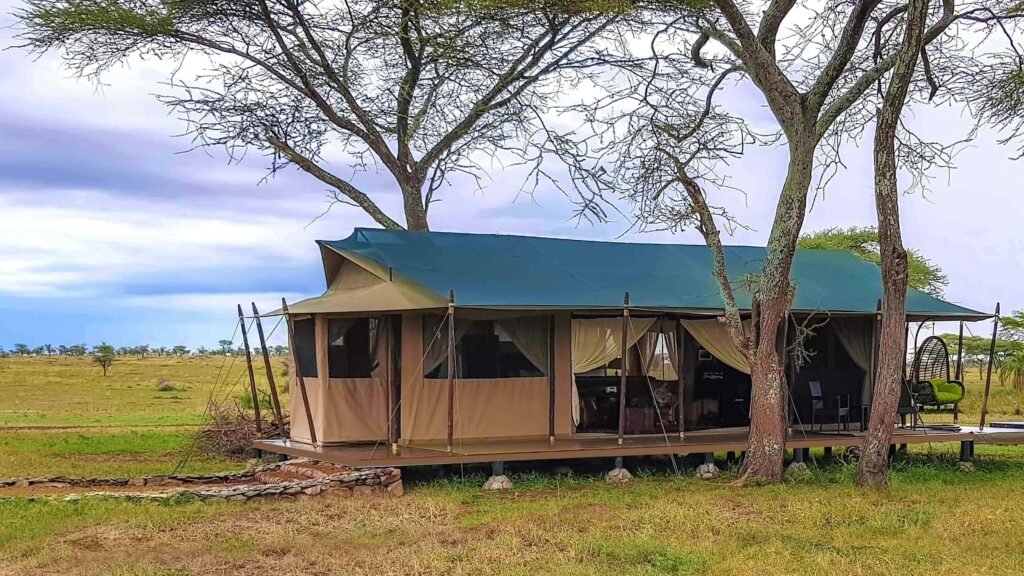
These are semi-permanent tents with real beds, so a step above a regular tent. They are often located just outside the park gates to avoid high conservation fees. Bathrooms may be shared or private. Showers may be (heated) bucket or regular.
⮕ Check with your tour operator if meals and drinks are included.
See my article What to Expect on a Budget Safari in Tanzania for more details.
Mid-Range Safari Accommodation: Comfort Meets Value
Mid-range options are perfect if you want a bit more comfort or privacy after long days of game drives. Expect:
Mid-Range Tented Camps
These are semi-permanent structures. Unlike public camping, these tents are built on wooden platforms or concrete bases. They often include en-suite bathrooms with hot showers. The camp will often include cozy communal spaces and/or a restaurant, and a fire pit. Electricity may not be available 24 hours, but only after dark (something you could check beforehand).
Safari Lodges
A “lodge” in Tanzania refers to a solid-structure building made of stone or wood. So this is more like a regular hotel. Of course quality varies according to the price level, and you can find many different options, from small basic establishments to international chains.
If you are nervous about animals or prefer a traditional hotel room feel, lodges offer a sense of security that canvas does not. They also often feature swimming pools, larger restaurants, and 24-hour electricity.
Luxury Safari Accommodation: Ultimate Wilderness in Style
For travelers seeking exclusivity, privacy, and full-service indulgence, Tanzania’s luxury safari lodges and camps deliver unforgettable experiences.
Luxury Tented Camps
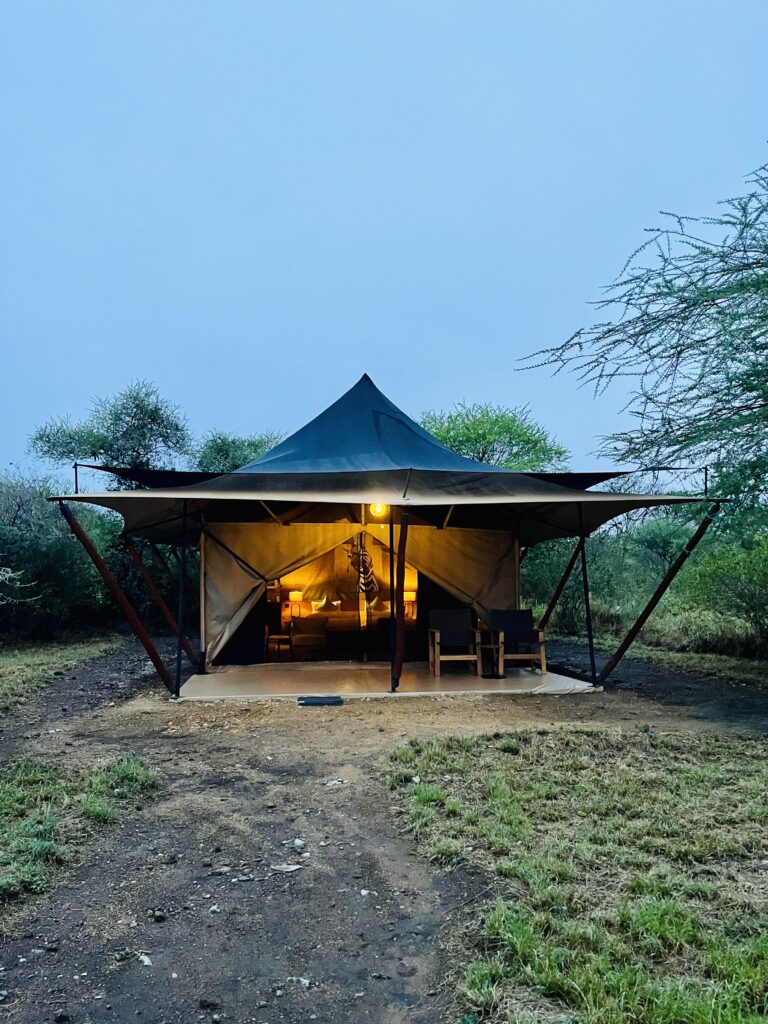
For those who do want to feel close to nature, but also enjoy luxury, this option is the best of both worlds. The basic structure of a tented camp is the same as described above, but the interior and materials will be nicer, service and food better. Luxury tented camps are often small, featuring only 6 to 10 tents. Expect nice ensuite bathrooms, private decks, and gourmet three-course meals served under the stars. Many luxury camps in Serengeti are mobile, meaning they move two or three times a year to follow the Great Migration. This ensures you are always in the heart of the action.
High-End Safari Lodges
This category covers establishments more like traditional luxury hotels, except they are located in or near a safari park. Expect elegant rooms or villas with panoramic views, gourmet meals, often with wine pairings, pools, spas, and private game drives. Places like Meliá Serengeti Lodge offer a resort experience in the wild. You will find spas, gyms, and even meeting facilities and kids’ areas. These are ideal for honeymoons and other trips where comfort is a priority.
How to Choose the Right Tanzania Safari Accommodation for You
Here are a few factors to consider when choosing your safari stay:
- Budget: Camping safaris are the most affordable; luxury lodges are the priciest.
- Travel Style: Are you adventurous, or do you crave comfort and relaxation? You should realize that, when staying in a tent or tented lodge, wild animals will be roaming around you at night. This could be a reason to opt for a tent with bathroom inside – or a lodge.
- Group Size: Solo travelers and couples often prefer smaller camps; families may want space and child-friendly amenities.
- Location: Staying inside a park gives you more time in the wild, but staying just outside is often cheaper.
Practicalities of Life at a Safari Camp
Living in the bush involves a unique set of rules. Whether you are staying in a five-star lodge or a basic tent, these practical tips will help you avoid common mistakes.
⚠️ Never Walk Alone After Dark
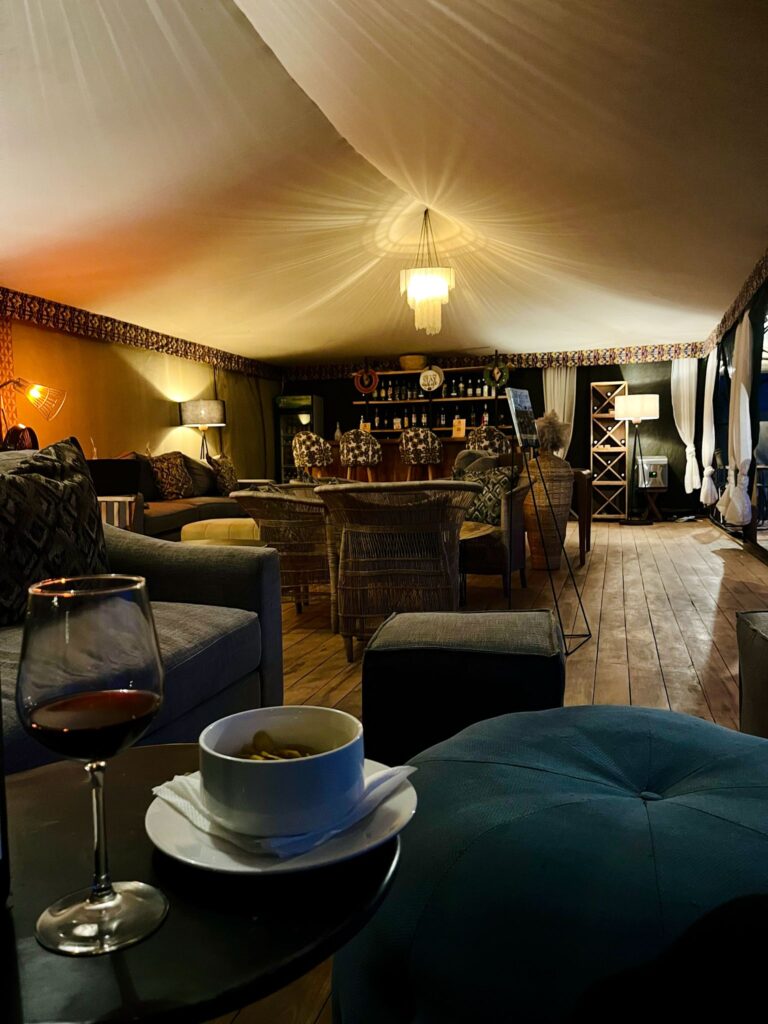
Most safari camps in the Serengeti and other national parks are unfenced. This means animals, including elephants, buffalo, and even lions, can and do wander through the camp grounds.
- From sunset to sunrise, you must be escorted to and from your tent by a staff member or a guard.
- Simply wait by your tent door or use the provided radio or whistle to call for a guard. Never attempt to sneak to the dining tent alone.
Solar Energy and Power Limitations
Tented camps are usually solar-powered with backup generators. This has some practical implications.
- High-voltage items like hair dryers or straighteners can blow the camp’s entire fuse. Many camps forbid them in the tents. If you must use one, ask the manager if you can plug it in at the main lounge area where the power supply is stronger.
- It’s not uncommon for camps to turn off the power between approximately 10:00 PM and 5:00 AM to conserve the batteries.
Laundry Tips
Many lodges offer laundry services, but there are some important caveats:
- Staff will generally not wash your underwear. Many lodges provide small tubs of laundry soap in your room so you can wash these yourself.
- Everything is sun-dried. If it is raining or highly humid, your clothes may take more than 24 hours to dry. Do not send laundry on your final night at a camp.
- At luxury lodges, laundry service may be included in your nightly rate. But it’s worth enquiring about costs beforehand, in order to prevent unpleasant surprises.
Concession Fees
Many travelers are surprised when their final accommodation bill is higher than expected. It’s important to know that, in addition to fees for entering the park (conservation fees), you pay additional concession fees if you sleep in the park. These differ depending on the park, and depending whether you stay in a tent or a lodge.
When you stay outside the actual park, it’s possible that you have to pay additional WMA fees for staying in a Wildlife Management Area (WMA). So it’s important to enquire beforehand with your tour operator what is included in the price you’re quoted.
The figures below are the concession fees for international travelers (non-residents) and include the 18% VAT.
Tanzania Overnight Safari Fees 2026 (VAT Inclusive)
| Park / Location | Adult (16+) | Child (5-15) | Infant (<5) |
| Serengeti & Nyerere (Lodges/Luxe Camps) | $70.80 | $11.80 | Free |
| Ngorongoro Crater Rim (Lodges) | $59.00 | $11.80 | Free |
| Tarangire & Manyara (Lodges) | $47.20 | $11.80 | Free |
| Southern/Western Parks (Ruaha, Mikumi) | $35.40 | $11.80 | Free |
| Public Campsites (All Parks) | $35.40 | $11.80 | Free |
| Special/Private Campsites (All Parks) | $59.00 | $11.80 | Free |
Final Thoughts
Whether you want to rough it in a basic tent or relax in a luxury suite, Tanzania offers safari accommodations for every type of traveler. Knowing what to expect from each level of comfort can help you plan a trip that matches both your budget and your dream experience. The sound of a hyena “whooping” outside your canvas tent at 2:00 AM is the one thing you will remember twenty years from now.
Ready to start planning?
Check out my curated list of the top rated safari lodges and camps for 2026 or head over to my guide on what to expect on a budget safari or discover when is the best time to visit Tanzania to align your trip with wildlife migrations and optimal weather.
You may also like: